Viber and Telegram: who makes the decisions?
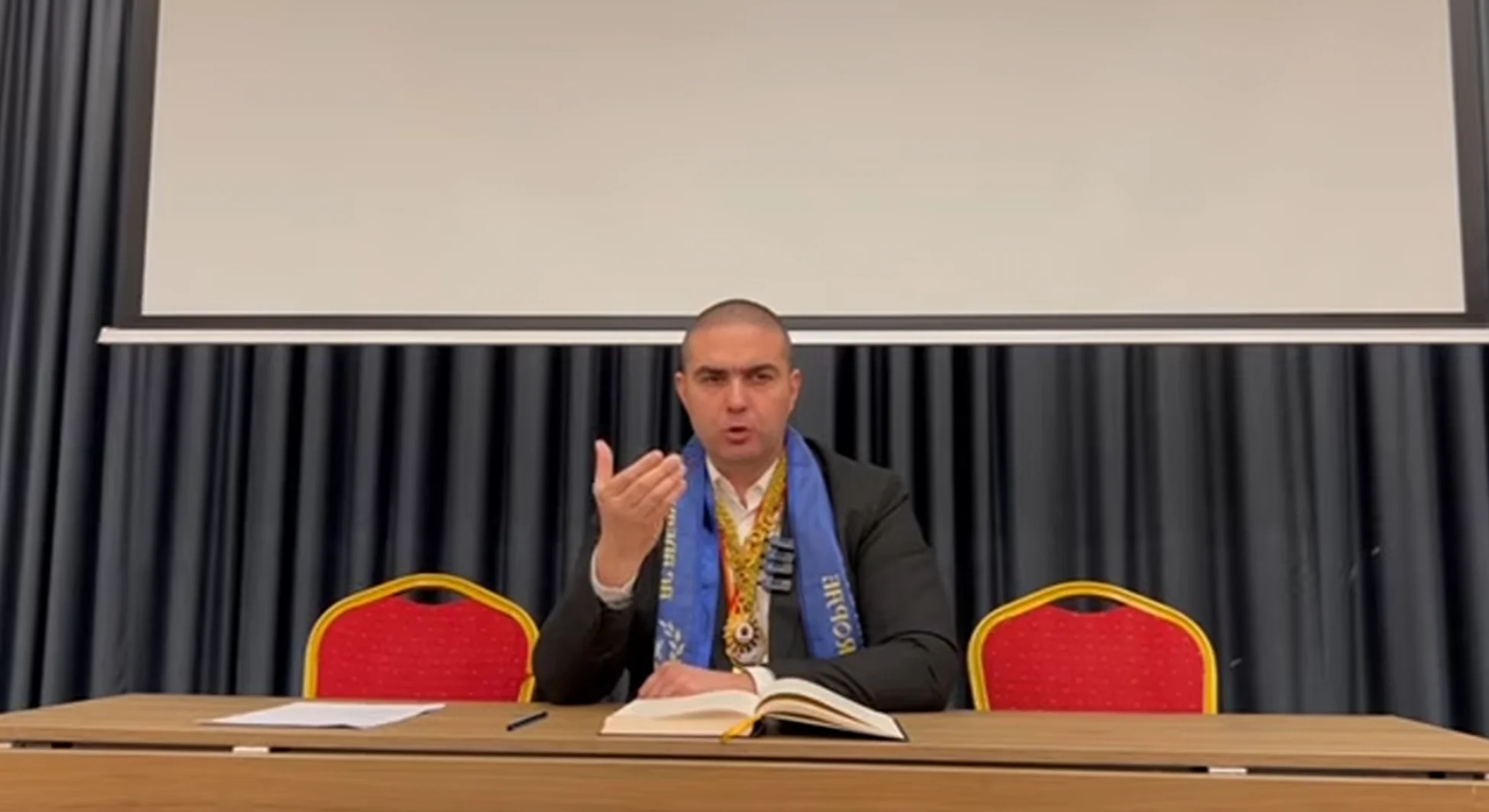
Dragan Tojagić discusses contacts, active status and privileges. The recording raises questions about accountability and verifiable decisions.
If the video does not start after pressing Play, reload the player. This resets playback to the beginning.
Source: a Rumble recording supplied by a reader. Recording date and location, completeness and original channel are unconfirmed. The transcript was edited from the supplied document “Tojagic VIBER GRUPE.mp4.docx”; it has not been checked against the audio.
Open video on Rumble ↗Do you support the views expressed in this video?
You are rating the views expressed, not the usefulness of the post or analysis. Votes do not verify facts. Click again to remove your vote.
Loading…
Comments
Criticism of our work is welcome. Insults, threats, personal data and calls for harassment are not allowed. An editor reviews every comment before publication.
Transcript · English editorial translation
Language-edited version, not a verified verbatim record. Square brackets mark unclear passages in the supplied transcript. Timecodes come from the document; the final two digits have not been interpreted as milliseconds. Numbers and years have not been reconciled by guesswork. These are editorial translations of the text, not subtitles.
- 00:00:01.18
On Telegram, nobody except a few people can see other people’s contacts anymore. For security? No. What security? [Unclear wording about someone needing to protect us.]
- 00:00:15.18
On Viber, you can no longer see people’s contacts. Four groups of roughly 1,200–1,300 people each.
- 00:00:28.17
About 4,000–5,000 people are on Telegram; 2,000 are not on Telegram. [Unclear wording about interest in Telegram and reading.] Only 200–300 people on Viber.
- 00:00:45.18
People collect contacts. They round out their own network: doctors, lawyers, politicians, businesspeople, [unclear wording about the market]. Then they have learned what they need spiritually and esoterically. [Unclear phrase.] And I respect that.
- 00:01:08.15
And that is why I voted, the only one, that this should not be restricted.
- 00:01:16.13
I am flattered when people say I am the head of this system and that it is mine. I really like it and feel good when I hear it, but unfortunately that is not the case. There are people who give orders to me too.
- 00:01:35.20
I have been listening for ten years. It is not that I have not always been great. My father knows that well, as one of the members of the council of sages. Usually I do not obey them. The competent institutions and the administration as well.
- 00:01:49.06
Then afterwards [unclear who] pays for those mistakes. [Unclear fragment.] But a decision has been made. It is not allowed.
- 00:01:59.04
At today’s meeting — how many cancelled, Brother Marko? 27 or 32? Up to 30 people cancelled their attendance. So be it; we can work more easily. Some will come afterwards to socialise, some will not; we will see.
- 00:02:16.16
Now that matters. Objective reasons. And this happens all the time, both in other lodges and to us. 57 register, although we limit it to 50 people; we cannot accommodate more. You know it gets short of air here afterwards, and so on.
- 00:02:33.21
We cannot accommodate many at the Sheraton either. At those small meetings, people do not all wear [unclear item]; I will not expand on that. Things will continue to get stricter. Attendance at ritual meetings is mandatory.
- 00:02:51.12
[Unclear opening] you will receive documentation on active status, concerning advancement and the desire and willingness to advance in Freemasonry and other secret societies. Brothers, someone admitted three months ago — just an example — who attends six of seven meetings to which he is invited cannot be treated the same as someone admitted three years ago who has not attended a meeting for two years. He must have priority. Privileges will be withdrawn, and active members will receive considerably more.
- 00:03:38.20
Do we need people for meetings? What we have been doing in recent months is only filming for [unclear word; possibly: platforms]. We are not interested in admitting candidates. A waste of time. We do not need new people at the moment.
- 00:03:53.02
Always the first, second, third degree. How much longer? We want to work the red, the white and the ancient Egyptian ones too. We want to show you the ninety-eighth degree. We want to show you the one hundred and first degree.
- 00:04:13.16
And so on, and so on. To do one, two, three. Then some music, some tombola, and there we are at the Sheraton, 200, 300, 500, three years ago at [unclear place name]. At Brother [unclear name]’s, I was really angry. Because the lodge leader [unclear wording about being informed].
- 00:04:32.09
He says: “You know, a major conference took place in 1907, with more than 20 countries present, brother; my friend, a former intelligence officer or an intelligence officer, it does not matter, was there, you know [unclear fragment], in Belgrade, bravo!”
- 00:04:52.03
Do you know, brother, with which [unclear word] we sit and socialise?
- 00:05:00.13
Always some need and some arrangement.
- 00:05:07.04
Do you know, brother, that at [unclear name: ‘Vila Moskvi’], here in Novi Sad, a few kilometres away, we worked for four nights, five days? Nearly a thousand male and female Freemasons gathered. [Unclear fragment] only three years ago.
- 00:05:24.05
Spare me 1903. Why do you not know what happened in our system three years ago? Forty-something countries of the world, almost 27 ritual meetings…
- 00:05:37.21
…different ones were held.
- 00:05:42.12
And about that [unclear: “I do not know”].
- 00:05:47.04
Emotion there!
Analysis: authority without a visible procedure?
00:01:16–00:01:49 — In the supplied text, he says he enjoys being called the boss, that others give him orders, and that he usually does not obey them. This raises a question about those bodies’ actual authority. It does not by itself prove that he personally makes every decision.
00:00:01–00:01:08 and 00:02:33–00:03:38 — He describes restricted access to contacts and announces compulsory attendance and redistribution of privileges. Rules, minutes and an appeal procedure are reasonable things to request. A relevant qualification: he claims to have been the only person voting against contact restrictions; this has not been independently verified.
00:03:38–00:05:37 — He says he currently does not want new candidates and discusses filming, degrees and a large gathering. This passage therefore does not prove that every decision aims to generate income from new members. The participant, country, meeting and degree figures remain his claims, not verified facts.
10 editorial questions
These are editorial questions based on the supplied transcript, not reader comments or accounts of fraud. Conclusions should be checked against the recording and documents.
- Who exactly decided to hide contacts, and where are the minutes of the vote? (00:00:01–00:01:08)
- Why do a few people retain access to contacts denied to everyone else? Who oversees that exception? (00:00:01)
- If he alone voted against the restriction, can that position be verified in a decision or minutes? (00:01:08)
- If others give him orders, who are they and how can their authority be verified? (00:01:16)
- What real control does a council have if, by his own account, he usually does not obey it? (00:01:35)
- Who bears the consequences of mistakes, and can a governing body overturn the speaker’s decision? (00:01:35–00:01:49)
- Where are the advance published criteria for active status, beyond an oral announcement of stricter rules? (00:02:33–00:02:51)
- Who removes and grants privileges, under which rules and with what right of appeal? (00:02:51)
- If meetings are filmed for platforms, do participants know the purpose and publication terms? (00:03:38)
- Which independently verifiable sources confirm the stated degrees, countries and participant numbers? (00:03:53–00:05:37)
Was this analysis useful?
Reader reactions do not verify the analysis. Click again to remove your vote.
Loading…
Comments
Criticism of our work is welcome. Insults, threats, personal data and calls for harassment are not allowed. An editor reviews every comment before publication.